My first mistake was choosing a townhouse, which sits in close proximity to other buildings and is surrounded by foliage. The pictures I took were too close to the building and contaminated with confusing details, so off the bat the process was rough. In MetaShape Pro, the alignment would not cooperate, so I took another batch of photos, this time using the 0.5 lens. The result was similarly terrible, but when I combined my first try photos with my second try batch, the result was better. Below on the left is my result using MetaShape Pro (somehow in the process the object was mirrored. I have no idea how this happened but my troubleshooting efforts were ineffective). While relatively unimpressive, this product took me an embarassingly large amount of time to render.
On the right is a model genreated by the PolyCam iPhone app using only one photo (from the first batch). This comparison is humbling becuase this model, while inaccurate on the back where the algoithm must have guessed on where to put features like windows and doors, looks way better and more complete than the one that I produced manually.
Of course, a 3D model of a building tells us a lot more about the space than only photos or a map. The 3D model allows viewers to compare different perspectives and toggle the rotation to see the ‘hidden’ side. For example, the PolyCam model had to guess about the ‘hidden’ side, and thus the software incorrectly predicts the placement, or even the existence, of numerous features.
The maker of the model assumes a completly different role than the passive observer of the same building. It is easy to walk around a campus and get a feel for the space, but you don’t really know the space until you’ve spend more time focused on the details. As someone who modeled Dixon House, I feel very well aquianted with the structure. However, I could say way less about the interior, in which I have not spent the same time with a close attention to detail.
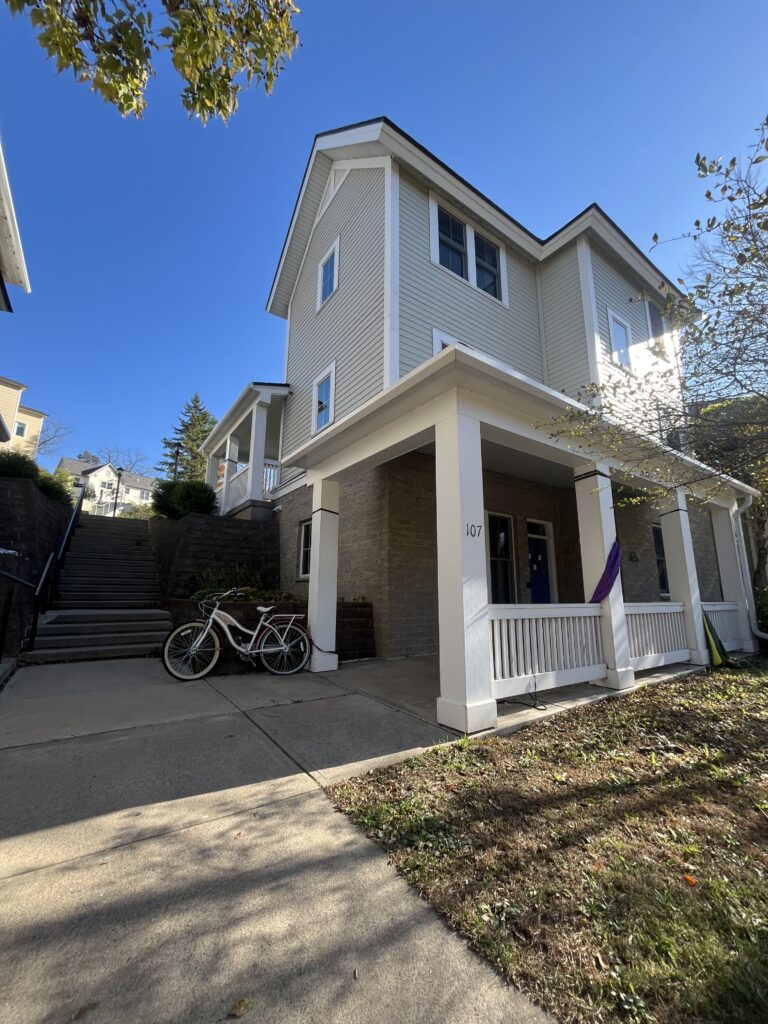
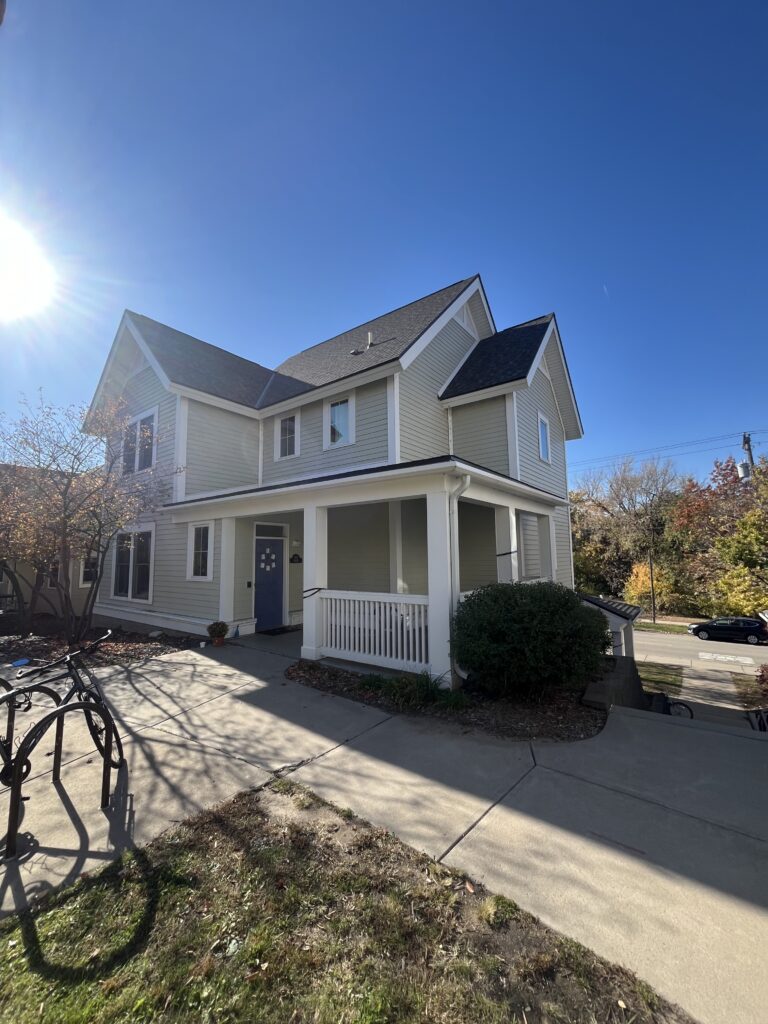
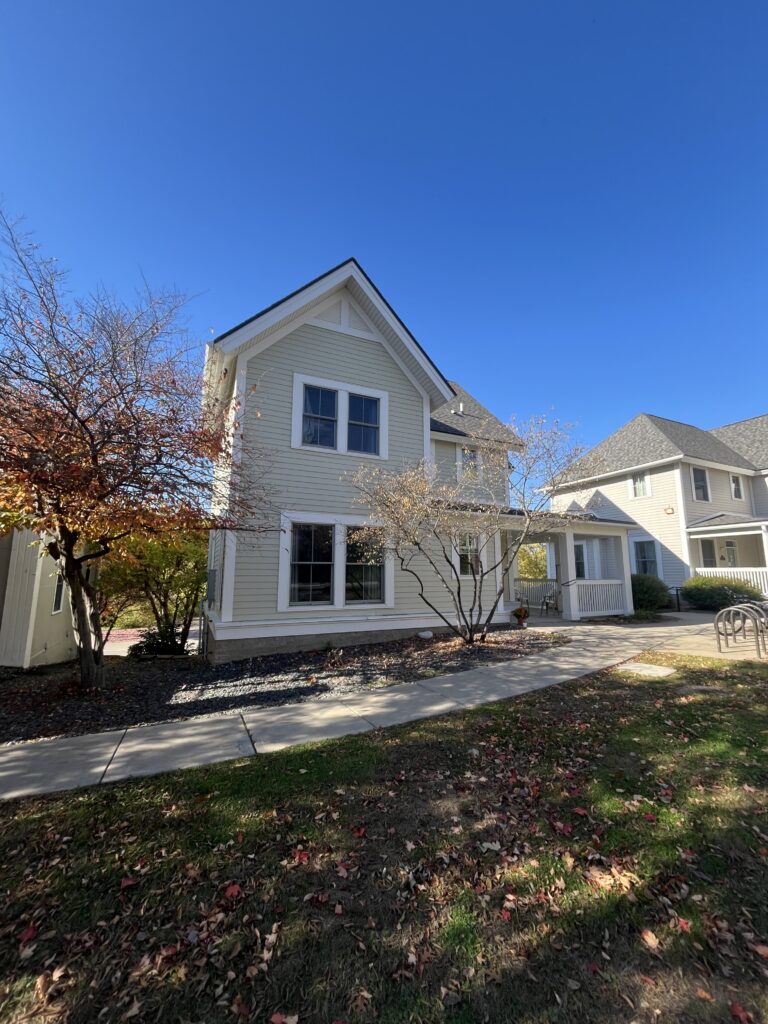
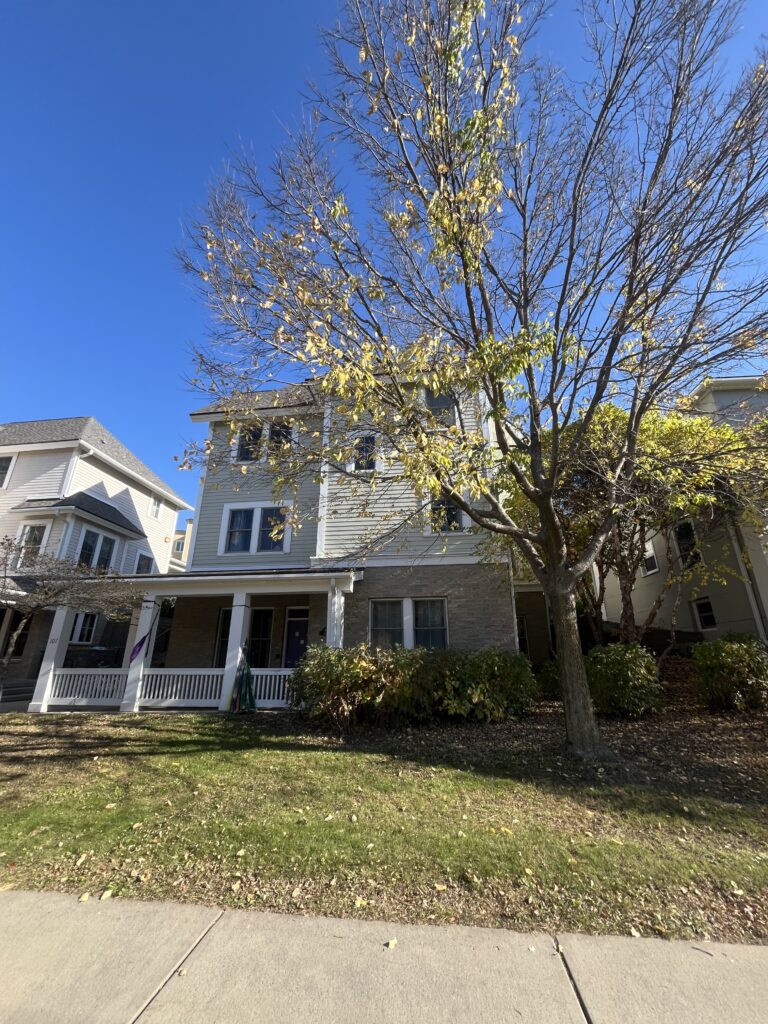


I also had a really troubling process with my house, and it was also surrounded by foliage. I wonder if there is a method or technology out there that would allow you to get a full, clean 3D model of the object despite this obstacle. I think despite this obstacle, your model still came out quite well. Regarding the AI polycam feature that you showed, I wonder what would be considered the better version to use for a 3D model. Obviously, an incomplete 3D model isn’t super useful to someone, but a complete-looking, but incorrect one can be quite misleading to the average viewer.
I too, was defeated this week. Dow got the better of me, and it seems as though we had pretty similar experiences with the modeling softwares. I spend so much more time fiddling with the MetaShape software, when PolyCam can create a fairly accurate scan with just one photo. For the record, I think your models are pretty good, all things considered! Glad we could be defeated together.