The cultural primacy of making, particularly in tech culture — that it is intrinsically superior to not-making, repair, analysis, and especially caregiving — is informed by the gendered history of who is credited with making things and, in particular, who made things that were shared with the world, not merely for hearth and home.
Debbie Chachra, “Beyond Making,” in Making Things and Drawing Boundaries: Experiments in the Digital Humanities, ed. Jentry Sayers, Debates in the Digital Humanities (University of Minnesota Press, 2017).
Imagine yourself walking through a museum exhibit full of artifacts from Ancient Egypt. All around, you are surrounded by ornate jewelry, carefully crafted sarcophagi, pottery, masks, amulets, and so much more. Throughout the experience, you marvel at the creativity, effort, and time spent perfecting each effort. You might even learn some history along the way. But does any museum visitor ever stop to think about who enabled the creators of these impressive objects to create? Who gave them the means and the support to spend their life creating? Someone had to educate them, someone had to cook, clean, and care for them. But because those people did not create the shiny objects we love to marvel at, they are forgotten throughout history.
That idea is why the passage struck me. It names something I have noticed but rarely seen acknowledged: society tends to glorify physical “making” while overlooking the invisible web of support and care behind every maker. One example that comes to mind is Taylor Swift’s music career. Of course, she is undeniably talented, but when she started her career, her family moved to Nashville, and her father invested in the record label that originally signed her. Would she be as successful without that initial support?
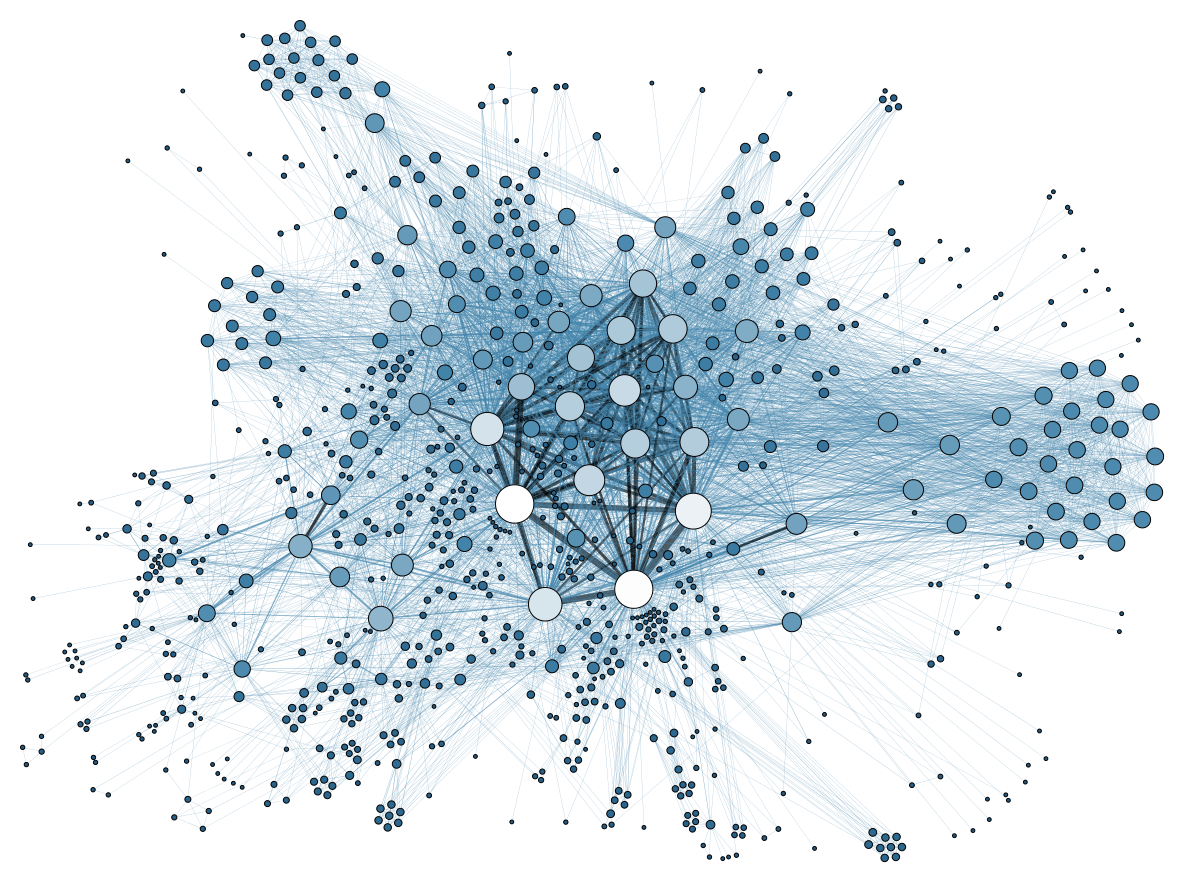
Attribution: Martin Grandjean, CC BY-SA 3.0 https://creativecommons.org/licenses/by-sa/3.0, via Wikimedia Commons
Reflecting on this quote made me feel immensely grateful for my own support system. As I pursue a research career, which in many ways is a form of “making”, I know that my progress relies on my family, friends, teammates, professors, and coaches who guide me. Being an athlete for so many years has taught me that success is rarely an individual achievement, even if it is represented that way.
Within the digital humanities, this perspective makes me particularly interested in ways to credit or visualize these hidden networks. For example, I think there could be a lot revealed about overlooked contributors and support structures using data visualization and archival work. The graph I included above is just one example of that. This term, I hope to explore some techniques that broaden the story we tell about who makes and who enables making.
