I explored the Minneapolis-based “Mapping Prejudice” project, which started in 2016. Their goal was to bring awareness to racial injustices when buying and owning homes. By identifying and mapping racial covenants inserted into property deeds which restricted non-white people from buying homes, they’ve been able to help change people’s understanding of structural racism.
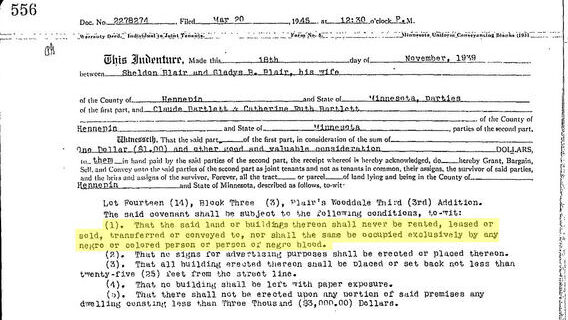
This project relied on the historical deeds and property records to find different racial covenants. Various maps of the Minneapolis area were used, along with metadata containing dates and addresses. They also relied on academic publications, educator guides, videos, text media, and presentations, under the “Resources” tab. Mapping Prejudice is largely reliant on volunteer work and crowdsourcing for their new data collections. They train and have tutorials available to anyone who is interested, on how to read, transcribe, or review old property files. The volunteers read and confirm whether flagged deeds actually contain racial covenants. Text mining through keyword flagging is how property records were originally flagged. With these covenants, the project uses georeferencing to link the discriminatory deed with its respective house address on a map. They have a few different interactive maps on their website that they’ve used to display their information. Their main map displays the houses where all the covenants came from. By zooming in on a green space on the map, one can click an address to see the racial covenant from that house’s deed. One can also select to see a timelapse of the increasing counts of racial covenants between 1910 and 1964. Additionally, they have more downloadable maps that explore racial covenants in other parts of Minnesota, and Wisconsin. A question that arose while looking at this project is, are there other states researching the same sorts of racial covenants that appear in Mapping Prejudice’s? What are their methods of collection and presentation like?
Discussion
Does the site make an argument?
This site and project makes a strong argument that there’s historical structural racism that constrains non-White people from homeowning. They back up their argument with text data from old housing deeds that have clear discriminatory language.
Which academic fields do you see the project in conversation with?
Some fields that I see in conversation with this project are history, anthropology, economics, Africana studies, and geography. This project involves lots of interdisciplinary fields, so there are lots of different academic disciplines and scholars that could work with Mapping Prejudice.
